Streaming Beyond the Screen: How Netflix Built a Dominant Digital Ecosystem
In 1997, Netflix mailed DVDs in red envelopes. Today, it commands more than 300 million subscribers across 190+ countries, streams in dozens of languages, and produces Academy Award-winning films. This isn’t a story of luck it’s a masterclass in digital ecosystem strategy, where every product decision, data investment, and content bet is part of a deliberately constructed flywheel.
Understanding Netflix’s growth means looking beyond its content library. The real story is about how the company built a self-reinforcing digital ecosystem one where technology, content, data, and community all feed each other in a continuous loop of value creation.
From Platform to Ecosystem
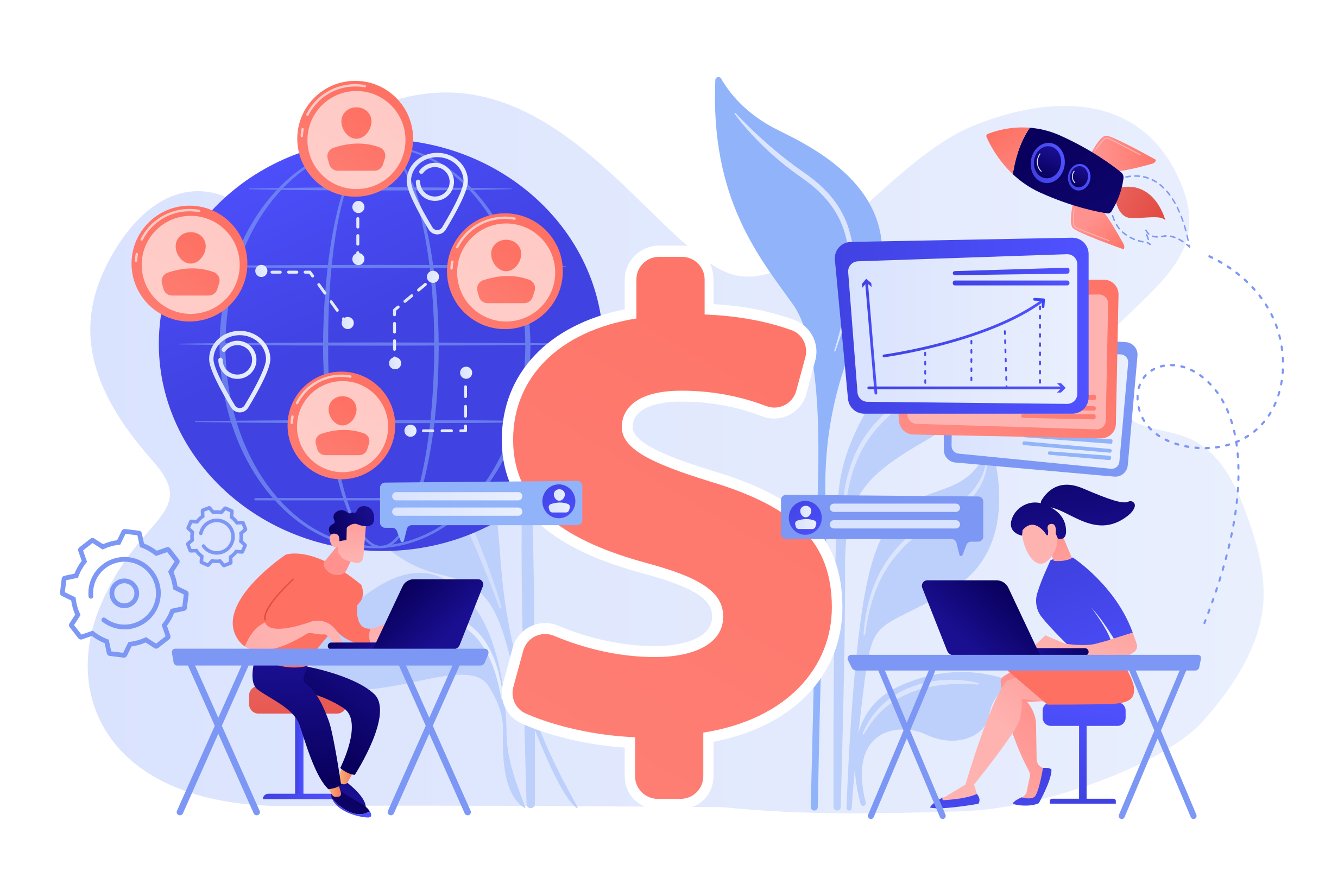
Most companies build products. Netflix built an ecosystem. The distinction matters enormously. A platform connects supply and demand. An ecosystem goes further, it creates interdependencies between multiple stakeholders creators, subscribers, advertisers, device partners such that each participant makes the whole more valuable by participating.
Netflix’s ecosystem has several interlocking layers. At its base is a global content delivery infrastructure that enables low-latency streaming anywhere. Above that sits a proprietary recommendation engine, fed by over a trillion data events per day. Encircling everything is a content strategy that spans original productions, licensed libraries, live events, and interactive experiences. And connecting it all is a brand identity so strong that “Netflix and chill” became a cultural idiom.
“The algorithm doesn’t just recommend what to watch — it decides what gets made. Data doesn’t follow content at Netflix; content follows data.”
Data as the Engine, Content as the Fuel
Netflix’s most underestimated competitive advantage isn’t its budget, it’s its data. Every scroll, pause, rewind, and abandoned episode is a signal. The recommendation algorithm, often described as saving Netflix roughly $1 billion annually in reduced churn, does more than surface the right show at the right time. It quietly determines which genres to invest in, which markets are ripe for local originals, and which thumbnail artwork will generate the most clicks in São Paulo versus Seoul.
This data flywheel is genuinely hard to replicate. Netflix has been accumulating behavioral data since 2007, when it launched streaming. Competitors entering the space in 2019 or 2020 started with a structural data deficit that no content budget can fully compensate for at least not quickly.
Ecosystem Insight
Netflix’s recommendation system influences over 80% of what subscribers choose to watch. This means the algorithm effectively shapes cultural consumption at a global scale a form of soft power few corporations have ever wielded.
Localization as Growth Architecture
Netflix’s international expansion strategy is often mistaken for simple geographic rollout. In reality, it’s a sophisticated localization architecture. When Netflix invested in “Sacred Games” for India, “Money Heist” for Spain, or “Squid Game” for South Korea, it wasn’t just serving local audiences, it was seeding cultural exports. “Squid Game” became the most-watched series in Netflix history and generated an estimated $900 million in global value from a single production.
This strategy reveals a crucial insight: local content, when crafted with quality and authenticity, transcends borders. Netflix essentially created a global distribution machine for regional storytelling, and in doing so, made every local investment a potential global hit. The risk is spread; the upside is global.
Monetization Evolution: The Ad-Tier Pivot
For years, Netflix’s identity was built on one promise: no ads. That promise cracked in 2022, and the ad-supported tier launched not as a retreat but as a deliberate ecosystem expansion. The results validated the strategy, the ad tier attracted a new, price-sensitive segment without cannibalizing premium subscribers, and it opened a new revenue stream with significant long-term potential.
More importantly, it brought advertisers into the Netflix ecosystem for the first time. With its rich first-party behavioral data, Netflix can offer advertisers something that open web advertising increasingly cannot: verified, engaged, opted-in audiences with demonstrated content preferences. This positions Netflix to become a serious player in the $700 billion+ global advertising market.
Strategic Shift
The ad-supported plan crossed 40 million monthly active users within its first year of global availability, a pace that surprised even internal forecasters and validated the thesis that price elasticity had been leaving significant subscriber growth on the table.
Live Events and the Last Frontier
The final piece of Netflix’s ecosystem puzzle is live content. Historically, live programming, sports, concerts, live comedy, drove appointment viewing and reduced churn. Netflix’s move into live events, including boxing matches and NFL Christmas Day games, signals its ambition to own the full spectrum of video entertainment, not just on-demand viewing.
Live content also strengthens the ecosystem by creating cultural moments that shared, simultaneous experiences that generate social conversation, press coverage, and word-of-mouth.
In an era where audiences are fragmented across dozens of platforms, the ability to create a collective moment is becoming increasingly scarce and correspondingly valuable.
Netflix’s growth is not the result of any single brilliant decision. It is the compounding effect of building a resilient digital ecosystem where data informs content, content attracts subscribers, subscribers generate more data, and the loop accelerates. As streaming matures and competition intensifies, the companies that will survive are those that move from platform thinking to ecosystem thinking, creating networks of value so interwoven that competitors cannot simply outspend their way in. Netflix didn’t just disrupt television. It built the architecture of the next era of global entertainment.